October 7, 2026
Domed Stadia – Why Some APAC Venues Are Looking Up to Avoid Uncertainty
Written by

And it’s not just weather that has venue owners, operators and teams interested in enclosing venues. Across the region, the question of enclosed venues is whether it solves a clearly defined problem better than an open, partially covered, fixed-roof or retractable-roof alternatives. The answer depends not only on local climate conditions, but also on seismic considerations, venue typology, pitch surfacing, event programming, urban context, and commercial objectives. While protection from the elements is an important benefit, the business case for enclosure is much broader. Owners and operators must weigh factors such as event scheduling certainty, spectator comfort, playing surface performance, maintenance requirements, energy consumption, acoustic control, year-round utilization, and overall capital investment.
A growing number of teams, municipalities and developers are asking the same question: should their venue have a roof?
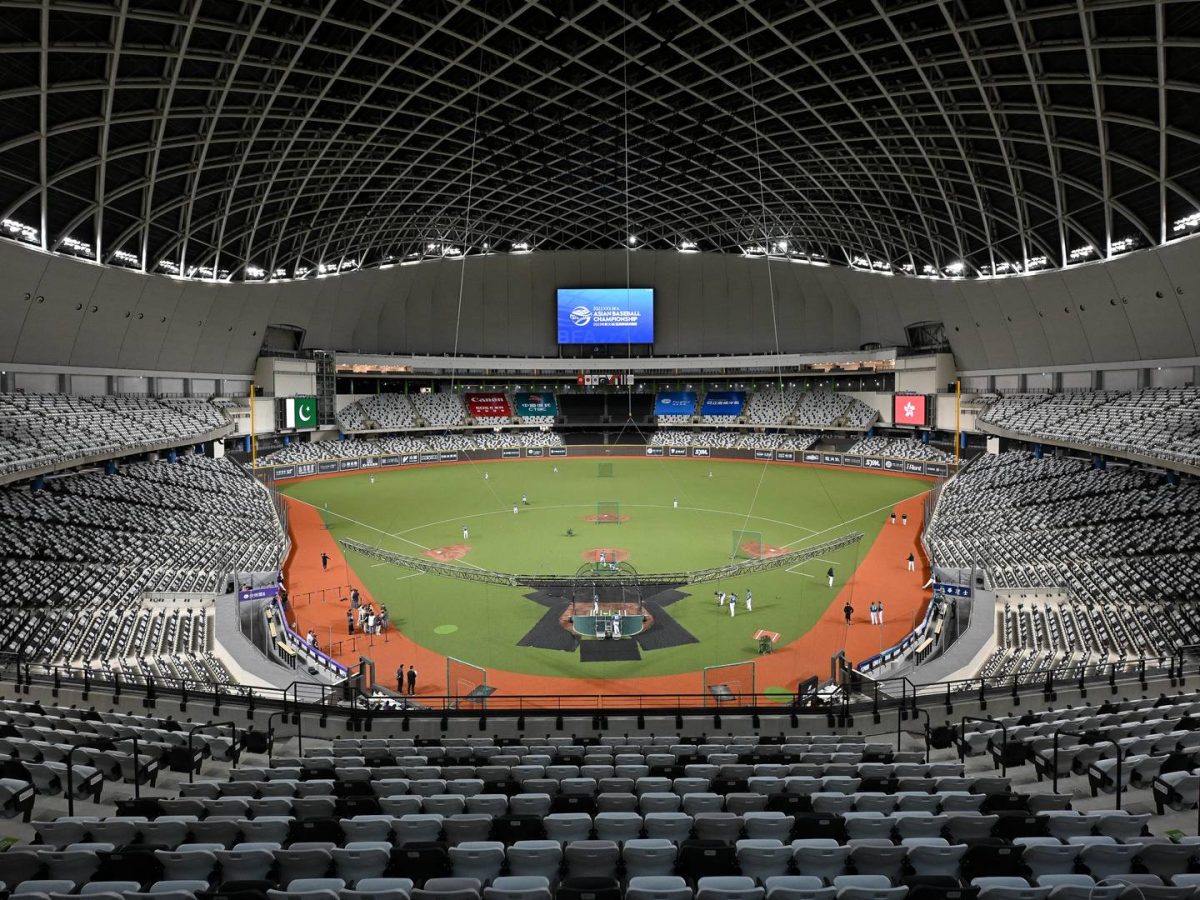
It is a question we hear often, from Seoul to Taipei to Hong Kong. Here, we set out the thinking behind domed and enclosed stadia: why owners consider them, what it costs to build one, and how the materials involved shape everything from ticket revenue to relations with the venue’s neighbors.
Why consider an enclosed roof?
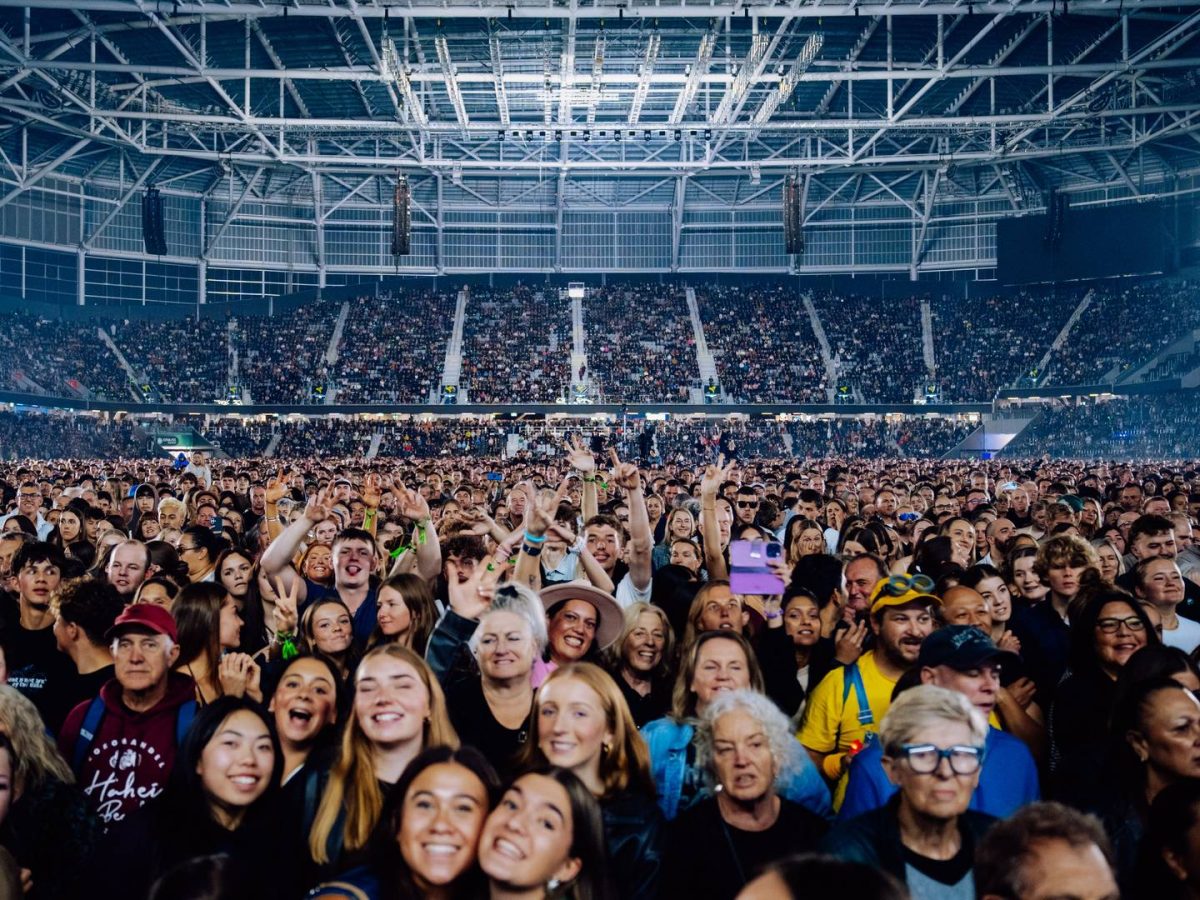
For some venue owners, the logic can be compelling. Weather cancels games and causes issues throughout the organization, and open-air venues are challenging for fans. They sit through the freezing cold or blistering heat and, even if they stay engaged, they are uncomfortable. An enclosed venue removes the weather risk, makes the event more enjoyable and opens the venue to a range of other revenue-earning opportunities such as concerts that would otherwise be at the mercy of the forecast.
There is a harder commercial logic that goes beyond fan comfort. Outside of APAC, in the southern United States, baseball teams in cities like Miami have long needed enclosed roofs simply because storms and rain make an open-air season unfeasible. A cancelled game does not just disappoint supporters. It disrupts the broadcast schedule and the revenue behind it. An enclosed stadium delivers something owners value as much as comfort: predictability, in the fixture list and on the balance sheet.
What does a roof cost?
That said, there is the significant issue of cost to consider. A roof can materially increase capital cost, with the premium varying significantly by span, structure, enclosure, climate, movement systems and building services. Owners need to weigh that increase against the extra events, revenues that are not reliant on weather, and the uplift in fan satisfaction it buys them.
The price premium is not simply the cost of the roof covering. It includes the long-span structure and foundations needed to support it, as well as additional façade, ventilation, cooling, smoke-control, acoustic and maintenance requirements. An operable roof also brings moving mechanisms, controls and ongoing inspection and replacement costs.
Those multiples assume a build that runs smoothly with delays changing the math considerably. Some projects have taken more than 10 years to complete, largely because changes in local government partway through can bring new scrutiny, and subsequent delays. Costs escalate quickly once construction stalls, not only because of inflation but partly because a half-finished structure left exposed for years needs re-assessing for safety, and partly because insurance costs climb the longer a project sits idle. By contrast, projects which run smoothly from start to finish can come in under budget, but this requires deep experience and collaboration between the consultants and owner during the development process.
The lesson for developers is that political and macro risk in the Asia Pacific, not just design choices, often decides whether a domed stadium is affordable.
Matching roof materials to performance requirements
For owners who want an enclosed roof without the weight and cost of glass or solid metal, membrane roof materials such as PTFE or ETFE (ethylene tetrafluoroethylene) have become a good choice. In contrast to the usually white opaque PTFE, ETFE is a lightweight transparent plastic membrane, usually built as multiple layers inflated into cushions and held under controlled air pressure for thermal insulation. The material lets in natural daylight and ultraviolet light (necessary for natural grass pitches) without turning the venue into a greenhouse. It also weighs a fraction of glass, which keeps steel tonnage and construction costs down.
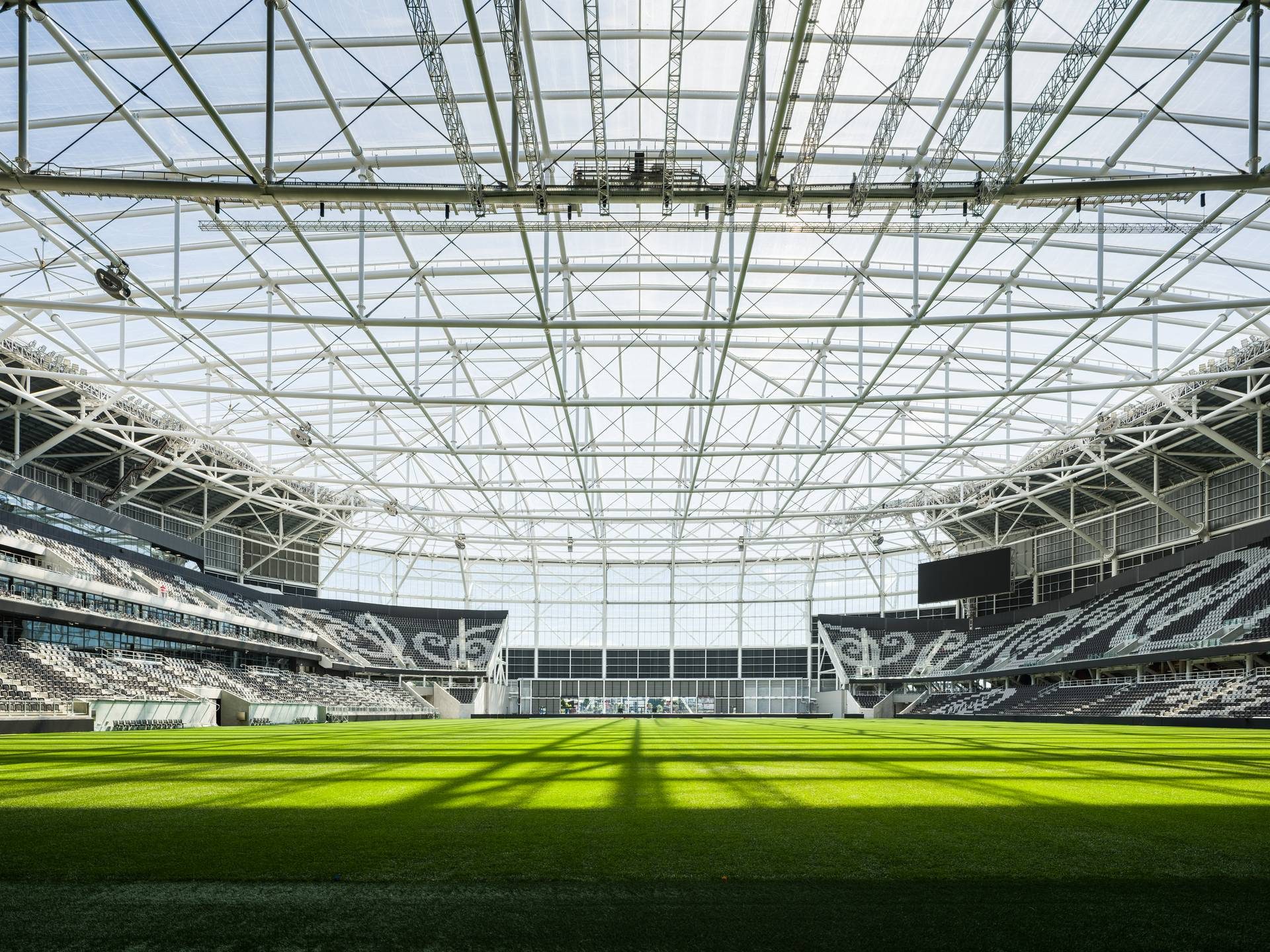
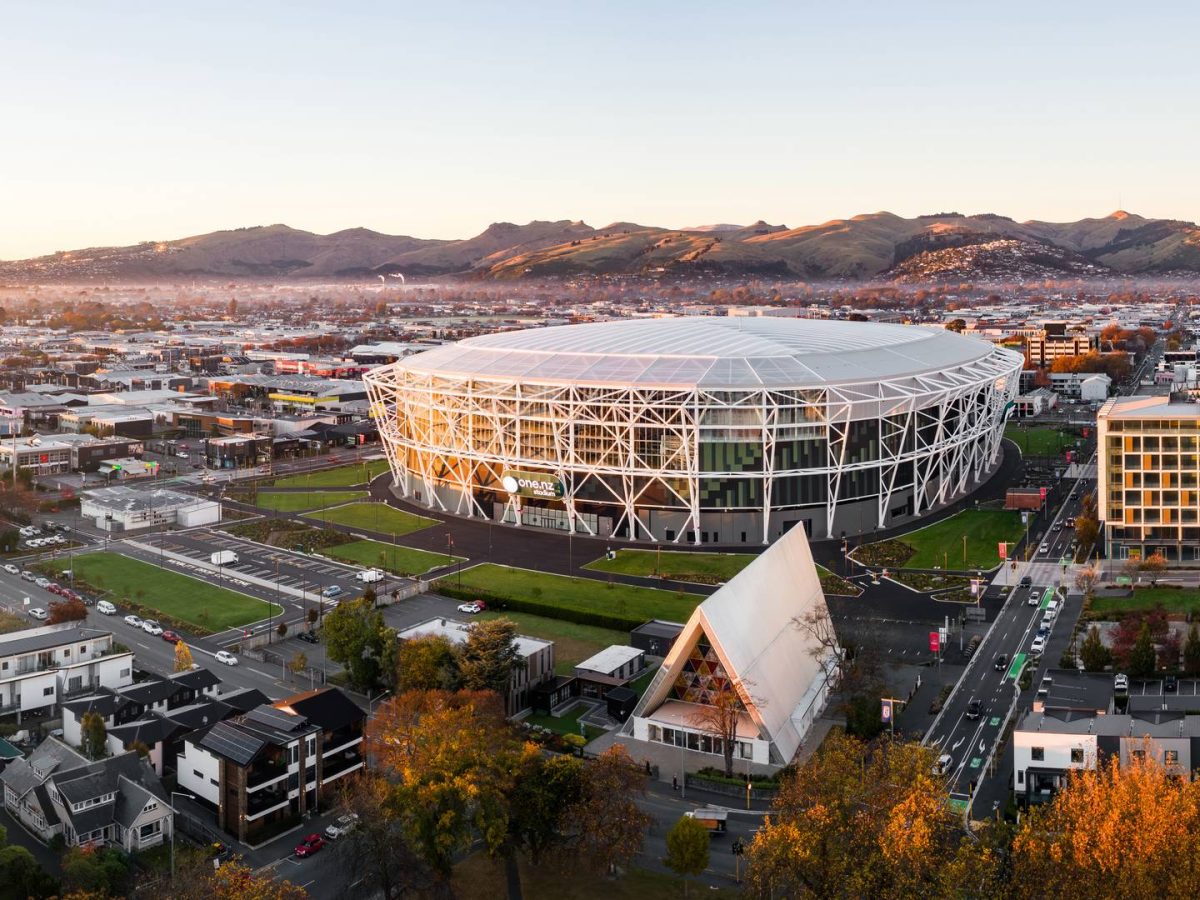
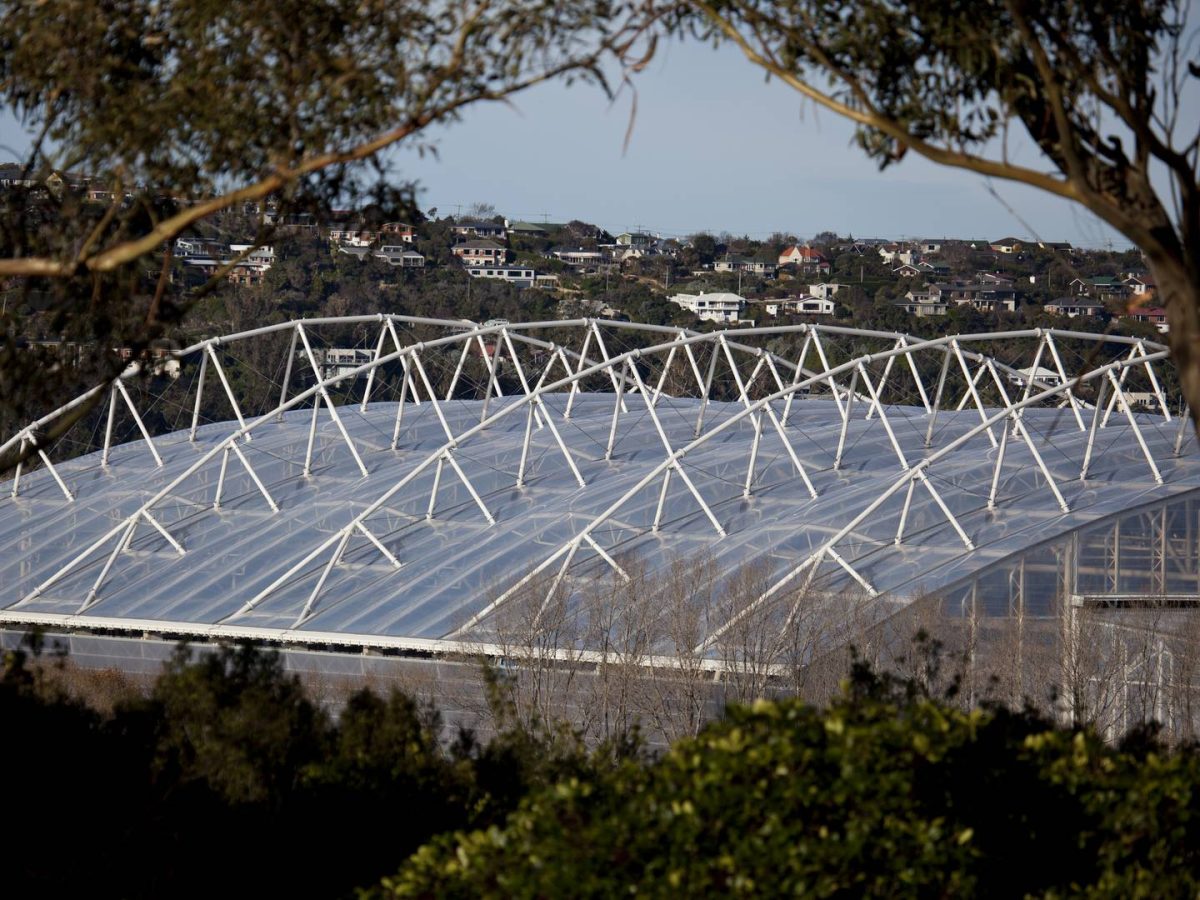
One New Zealand at Te Kaha, Christchurch’s new stadium, is a good illustration of the trade-offs in practice. By tradition, rugby has tended to use natural grass rather than an artificial surface, so the design had to bring in daylight while protecting the pitch from the harsh weather of New Zealand’s South Island. A third of the roof is solid metal for shade, and the remaining two-thirds is a lightweight steel bowstring truss carrying an ETFE membrane. Beyond daylight and cost, the lighter roof also performs better in an earthquake than a heavier glass or solid structure, which matters a great deal in a seismically active country.
ETFE has been around since the 1970s but only became commercially significant in the 1980s and 1990s. A milestone project remains the geodesic biodomes of the Eden Project in Southwest England which was entirely clad in ETFE, proving the material could perform at scale without excessive maintenance. ETFE facades can also be lit from within to dramatic effect, while Beijing’s National Aquatics Centre, the Water Cube, used translucent ETFE cushions across its roof and facade for the 2008 Olympics.
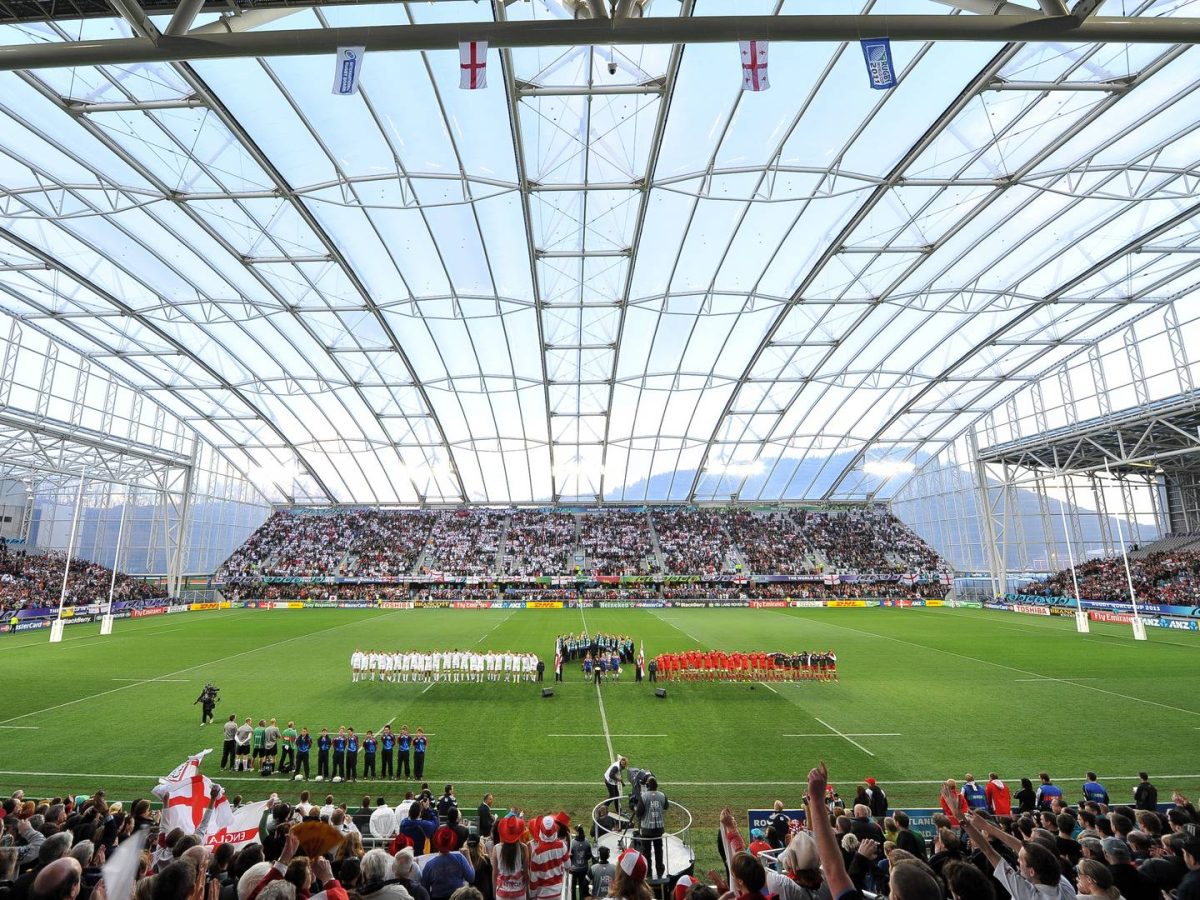
The Populous-designed Forsyth Barr Stadium in Dunedin is widely recognized as the world’s first permanently covered stadium with a natural turf playing surface. It demonstrates how transparent roofing can support grass growth while protecting spectators from challenging weather conditions, helping drive attendance by providing a more comfortable and dependable event experience.
In the US, the Populous-designed Tampa Bay Rays’ new ballpark illustrates how similar challenges are shaping venue design decisions globally. The stadium is planning to use a transparent membrane material similar to ETFE to help keep fans comfortable through Florida’s summer heat and storms while preserving an open-air feel. This product is a newly developed transparent membrane system with improved performance specifications according to the manufacturer.
What are the trade-offs?
Some owners remain cautious about ETFE because it is, at heart, a plastic membrane and can be punctured by sharp objects. Modern coatings largely solve the maintenance concern, helping dirt and rain wash off the surface naturally. A damaged panel can be isolated and patched without affecting the rest of the roof because the system is built in independent modules.
Acoustics are a bigger challenge. ETFE has effectively no sound insulation, so a roof built purely from the material is practically acoustically transparent. That matters for concerts in residential areas, where a curfew can force an act to cut a set short, or where an operator faces fines and noise complaints from residents kilometers away. It is also a weaker thermal insulator than a solid roof, so warming and cooling for athlete and spectator comfort need separate engineering solutions, though pneumatic control of the inflation levels between layers can help manage thermal energy transmittance in and out of the seating bowl.
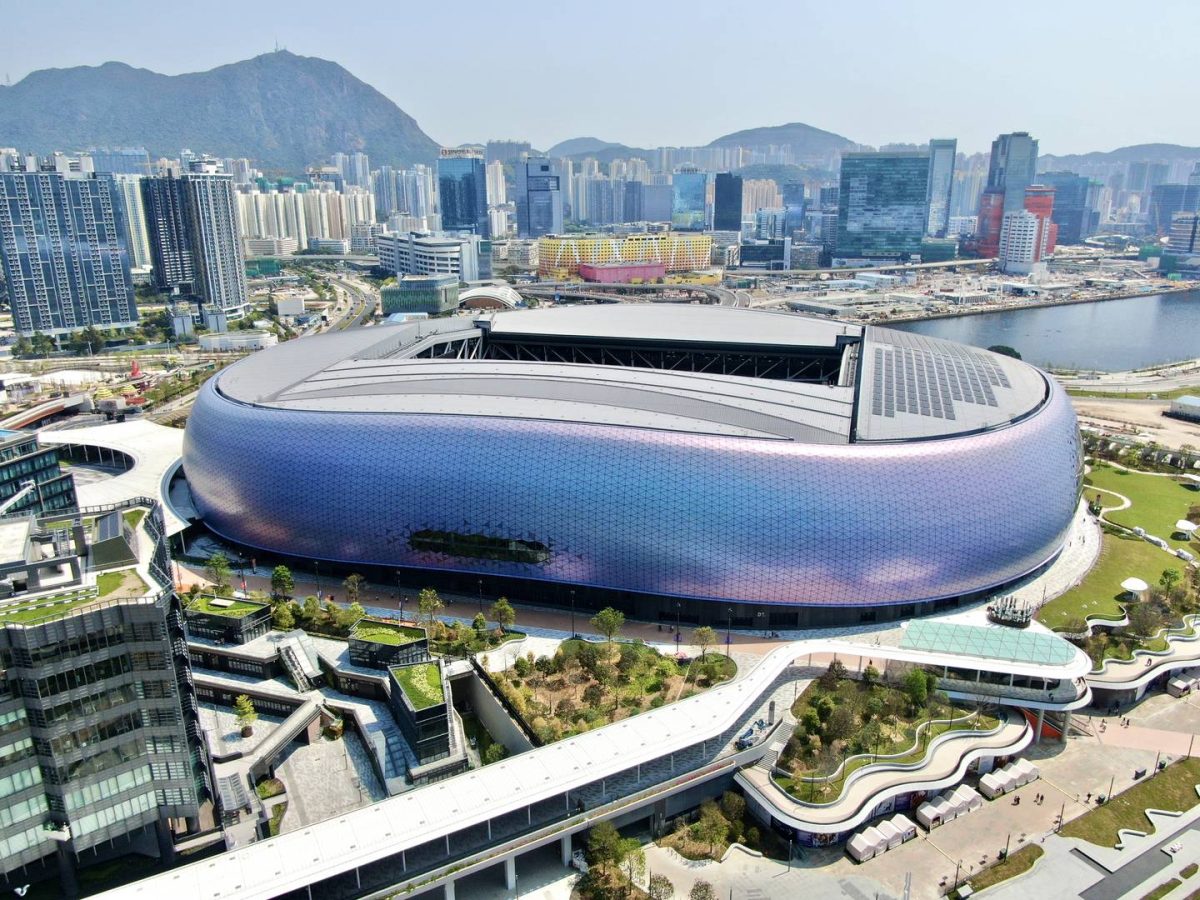
This is precisely why Kai Tak Stadium in Hong Kong took a different approach. Its retractable roof needed to contain the noise of a 50,000-capacity crowd or a major concert without disturbing nearby residents, making acoustic performance a key design driver. The roof is therefore significantly heavier than a lightweight ETFE solution, reflecting both its acoustic requirements and the structural demands of a large retractable enclosure. This represents a deliberate trade-off against the daylight-optimized approach used at venues such as One New Zealand.
Can you have it both ways?
There are ways to get more control out of an ETFE roof than a simple on-or-off approach. One method prints a dot pattern, known as a frit, onto the ETFE layers. As the cushion inflates, the dots spread apart and more light passes through; as it deflates, they compress and the panel darkens, giving operators a way to vary light levels without changing the structure itself.
This does not mean ETFE is the right answer for every stadium. The real design question is always specific to the venue: the site, the climate, the neighbors and what the stakeholders are trying to achieve. A venue built for natural turf and daylight, in a low-density setting, points towards a lightweight membrane. A venue boxed in by residential towers, built to host concerts as often as it does sport, points towards a heavier, acoustically engineered roof. Getting that judgement right at the outset avoids expensive retrofits later.
What should developers in APAC take from this?
Domed and enclosed stadia are no longer a niche response to weather disruption. As climate patterns become less predictable and venue owners seek greater certainty around scheduling, revenue and year-round utilization, the case for enclosure is being assessed across a growing range of projects throughout the Asia Pacific. The choice is rarely as simple as open versus enclosed. It is a layered decision involving structural weight, seismic performance, thermal comfort, acoustics and, ultimately, how many additional event days a roof can unlock over the life of the asset.
As more of the region’s venues weigh these options, from new-build ballparks to ageing stadia due for renewal, the lessons from Christchurch, Kai Tak and Forsyth Barr offer a practical starting point: first define what the roof needs to achieve, then determine the material and system best suited to delivering that outcome.

Lorem ipsum dolor sit amet consectetur, adipisicing elit. Non facere corporis et expedita sit nam amet aut necessitatibus at dolore enim quis impedit eius libero, harum tempore laboriosam dolor cumque.
Lorem, ipsum dolor sit amet consectetur adipisicing elit. Illo temporibus vero veritatis eveniet, placeat dolorem sunt at provident tenetur omnis, dicta exercitationem. Expedita quod aspernatur molestias eum? Totam, incidunt quos.