June 11, 2026
How Estadio BBVA Captures the Spirit of Monterrey
Written by

Designing for Monterrey
From the start of the design process, we wanted the stadium to feel as though it belonged to Monterrey. Designed as if its form had emerged directly from the city itself.
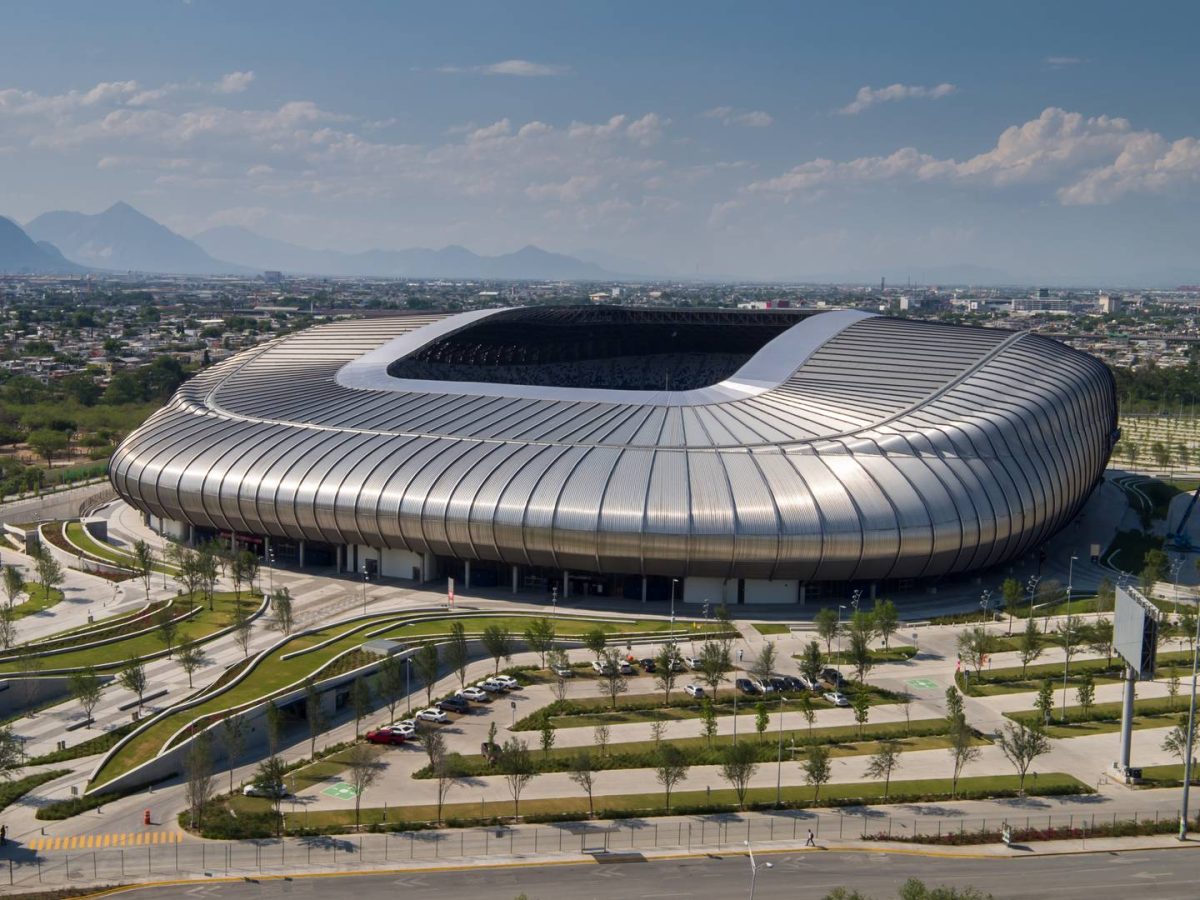
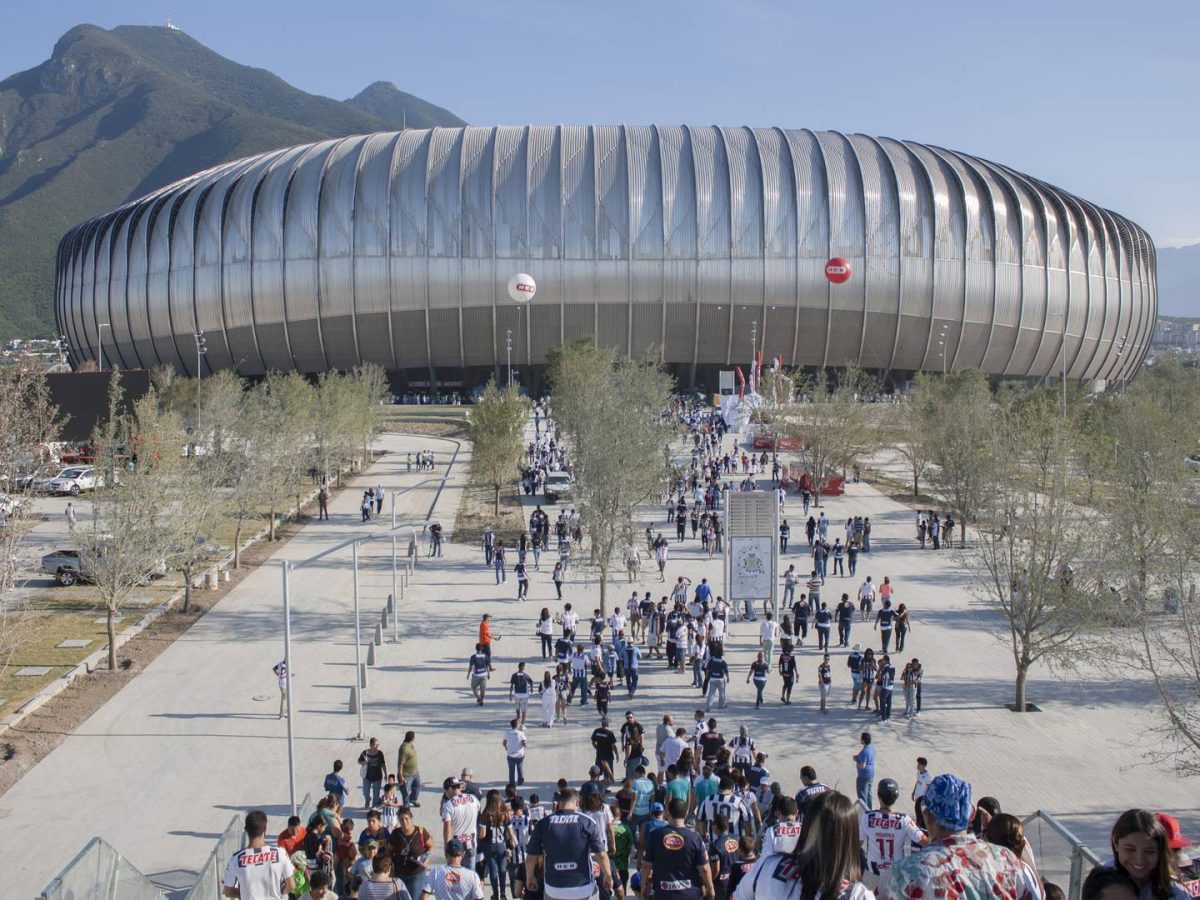
As the home to the first iron and steel foundry in Latin America, Monterrey’s identity is indelibly linked with steel production. It also has a strong brewing tradition rooted in Cerveceria Cuauhtémoc, which was founded in the city in 1890. That legacy gave us a strong starting point for the design. The stadium’s sweeping asymmetric form grew in part from the silhouette of brewing stills, while the self-supported tripod steel system and the use of aluminium and rolled steel give the building a bold presence that feels distinctly of Monterrey. It has even earned the nickname among fans of El Gigante de Acero — the steel giant — which affirms how closely the materials and structure respond to our original design intent.
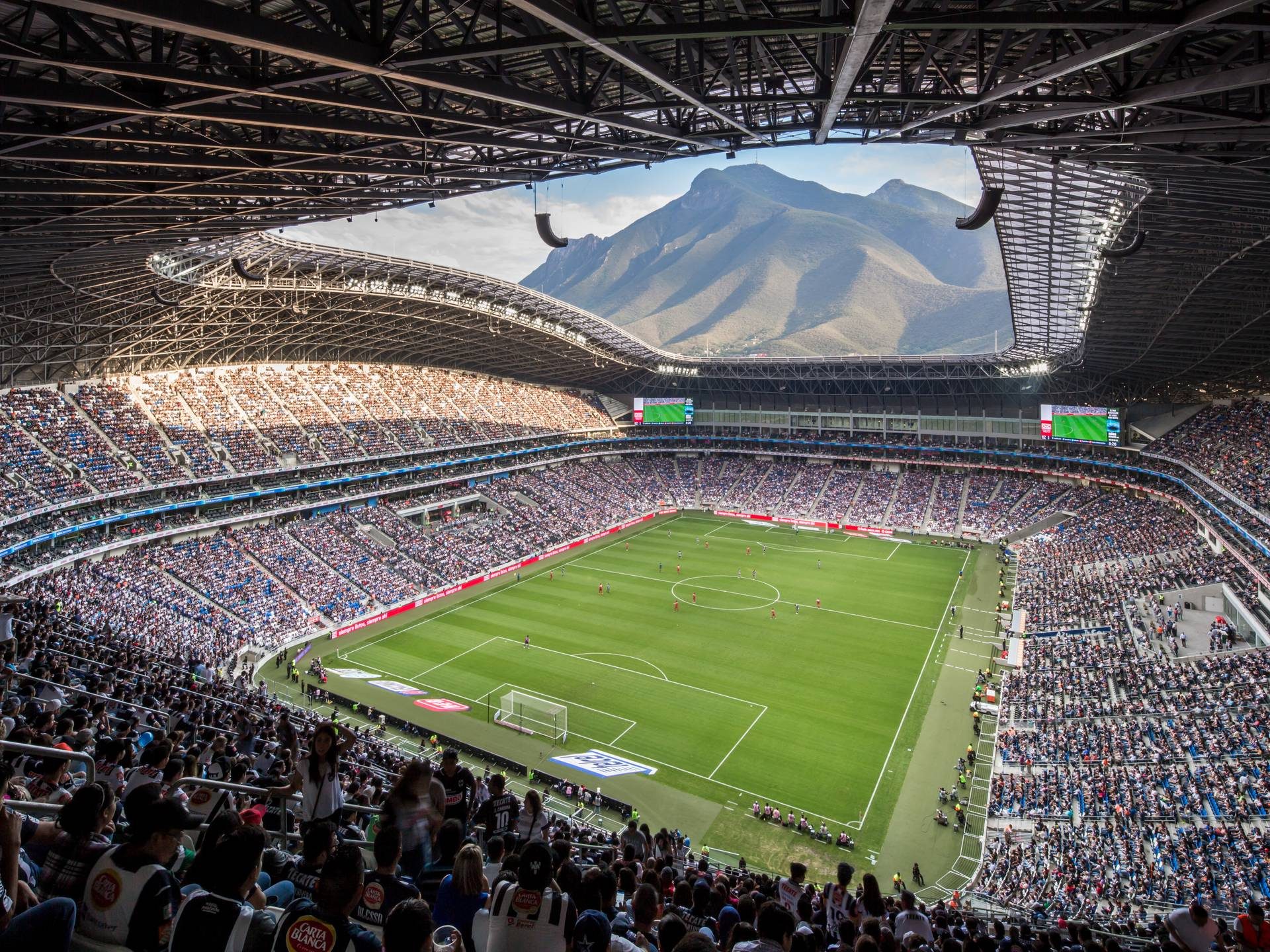
Alongside this, the landscape was impossible to ignore. The looming Cerro de la Silla was one of the strongest drivers in the design process — we knew the mountain had to play a part in the stadium experience. Rather than turning inward and blocking out its surroundings, we wanted the building to embrace its dramatic setting, so it would become part of the game itself. This desire determined the orientation of the bowl and the shape of the roof, which drops down to the south to frame views of the mountain from the north stand.
A bowlful of atmosphere
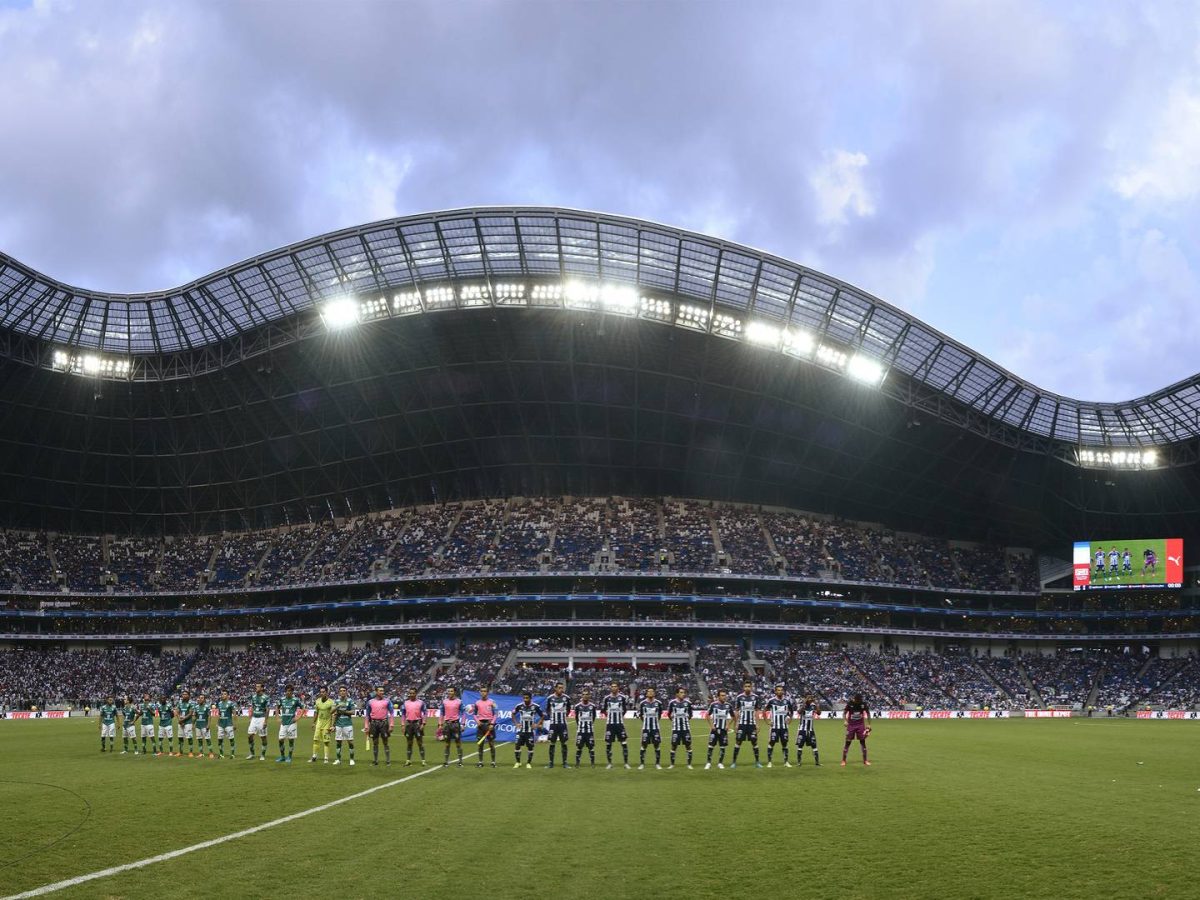
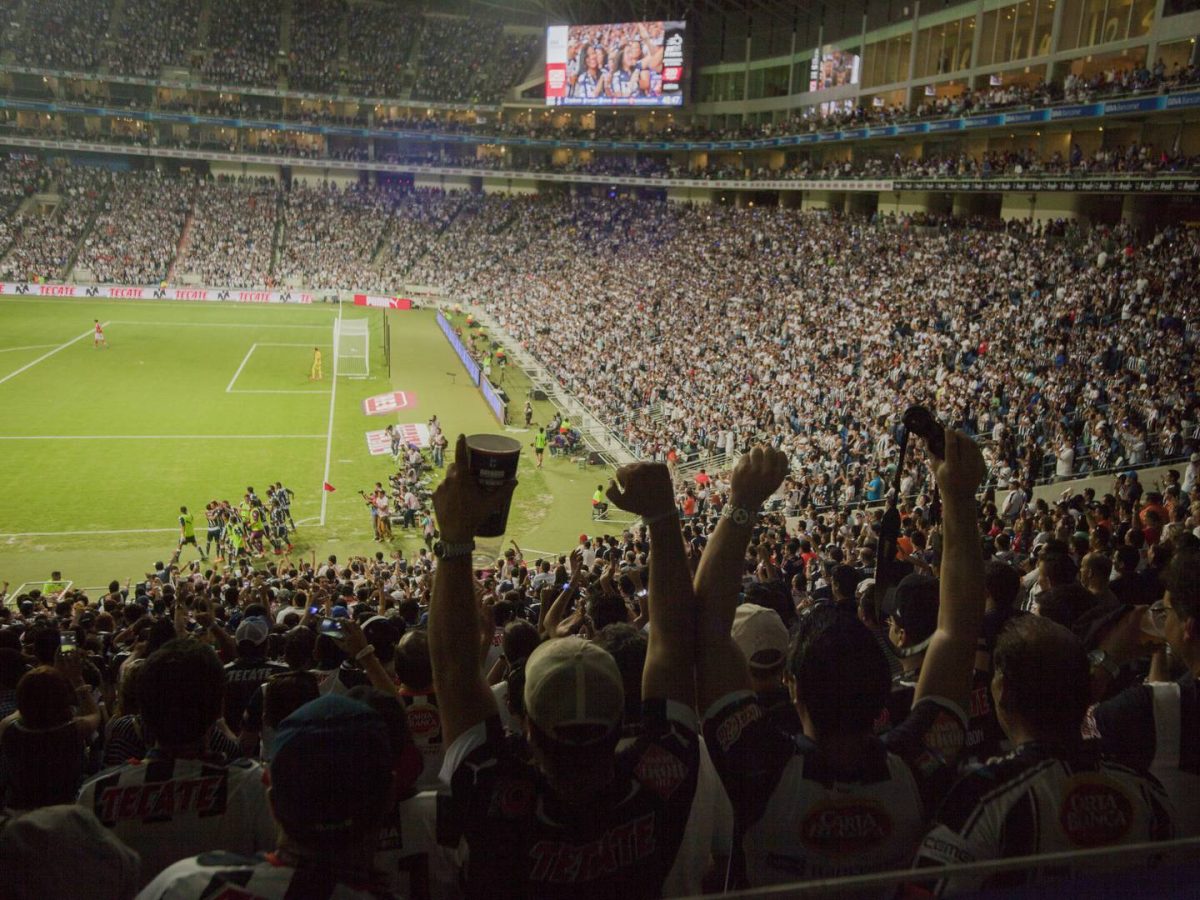
“The best stadiums balance scale with intimacy, and Estadio BBVA achieves that balance exceptionally well. With a capacity of more than 51,000, it is one of Mexico’s largest stadiums, yet fans remain intimately connected to the action on the pitch and feel part of a community of fans. That comes down to the bowl geometry, the rake of the seating and the proximity to the pitch.
The stands are steep, with a rake of 34 degrees, and they’re positioned as close to the field as FIFA regulations allow, connecting the crowd to the game and generating an intensity that never lets up. And when supporters take their seats in the north stand, they’re met with those jaw-dropping views of Cerro de la Silla.
The stadium’s significant premium offering necessitated another careful balancing act. Its 4,500 club seats and 324 suites comprise the largest premium seating offer of any soccer stadium in Latin America. So the challenge was to accommodate such a sizeable proportion of hospitality without impacting the general atmosphere. Our success in meeting that challenge by strategically arranging the various hospitality zones has created one of the building’s defining qualities.
“The best stadiums balance scale with intimacy, and it’s a balance Estadio BBVA strikes particularly well. With room for over 51,000 fans, it’s one of Mexico’s biggest stadiums, but fans never feel detached from the action on the field, or from each other.”
Performance built into the architecture
Monterrey is warm year-round and gets very hot in summer. We didn’t want to respond to the climate with an enclosed, mechanically cooled building. Instead, we designed the stadium to work with the local conditions and breathe naturally. The 55-meter cantilevered roof provides substantial shade across the bowl, while the open sides preserve airflow. Gills in the façade are angled to capture prevailing breezes and guide fresh air into the stadium, cooling occupied areas while drawing warm air up and out. The same environmental thinking extends beyond the bowl. More than a third of the site is made up of permeable green space, which manages rainwater naturally and allows it to filter back into local aquifers.
These elements are technical but they’re also central to the building’s visual identity — a marriage of form and function that the best architecture strives to achieve.
From club ground to global stage
The best World Cup stadiums give something back to the event. They offer the world a genuine reflection of the host city. When the tournament arrives in Monterrey, fans won’t be stepping into a generic soccer venue. They’ll find a stadium shaped by the city’s identity, landscape and football culture. Estadio BBVA will be a natural fit for the World Cup precisely because it was designed first with Monterrey in mind.

Lorem ipsum dolor sit amet consectetur, adipisicing elit. Non facere corporis et expedita sit nam amet aut necessitatibus at dolore enim quis impedit eius libero, harum tempore laboriosam dolor cumque.
Lorem, ipsum dolor sit amet consectetur adipisicing elit. Illo temporibus vero veritatis eveniet, placeat dolorem sunt at provident tenetur omnis, dicta exercitationem. Expedita quod aspernatur molestias eum? Totam, incidunt quos.