April 7, 2026
Worldwide Scale, Individual Impact
A 12-year-old stands in the grandstand next to the stadium tunnel, waiting nervously for their favorite player to run onto the field, feeling their heartbeat accelerate.
The match will be remembered for the scoreline, the stakes, the history.
But for that child, it will come down to something smaller yet infinitely more meaningful: a high five, a glance, a fleeting connection with a player stepping onto the pitch.
That is their World Cup.
And in 2026, as the tournament expands for the first time across 48 teams, 16 cities and three countries, that is the real opportunity for impact.
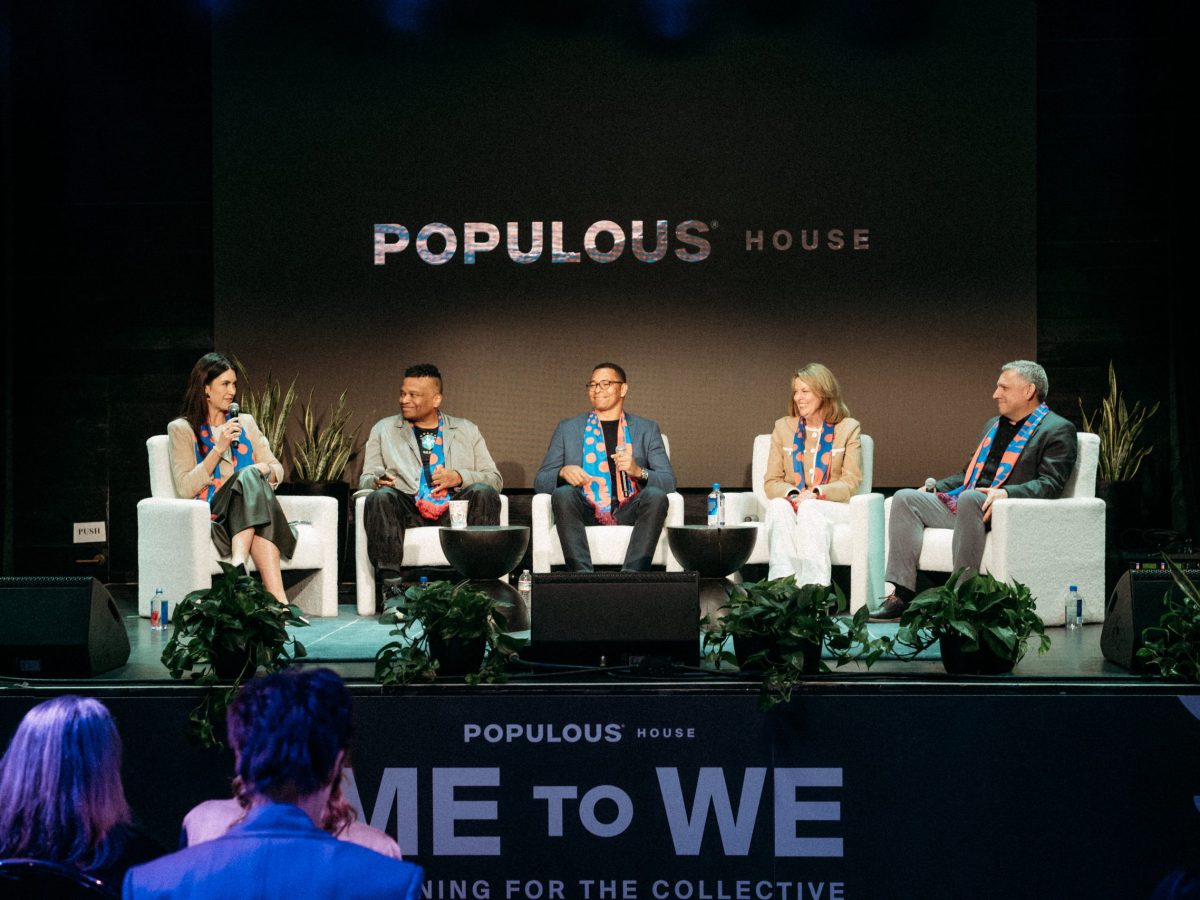
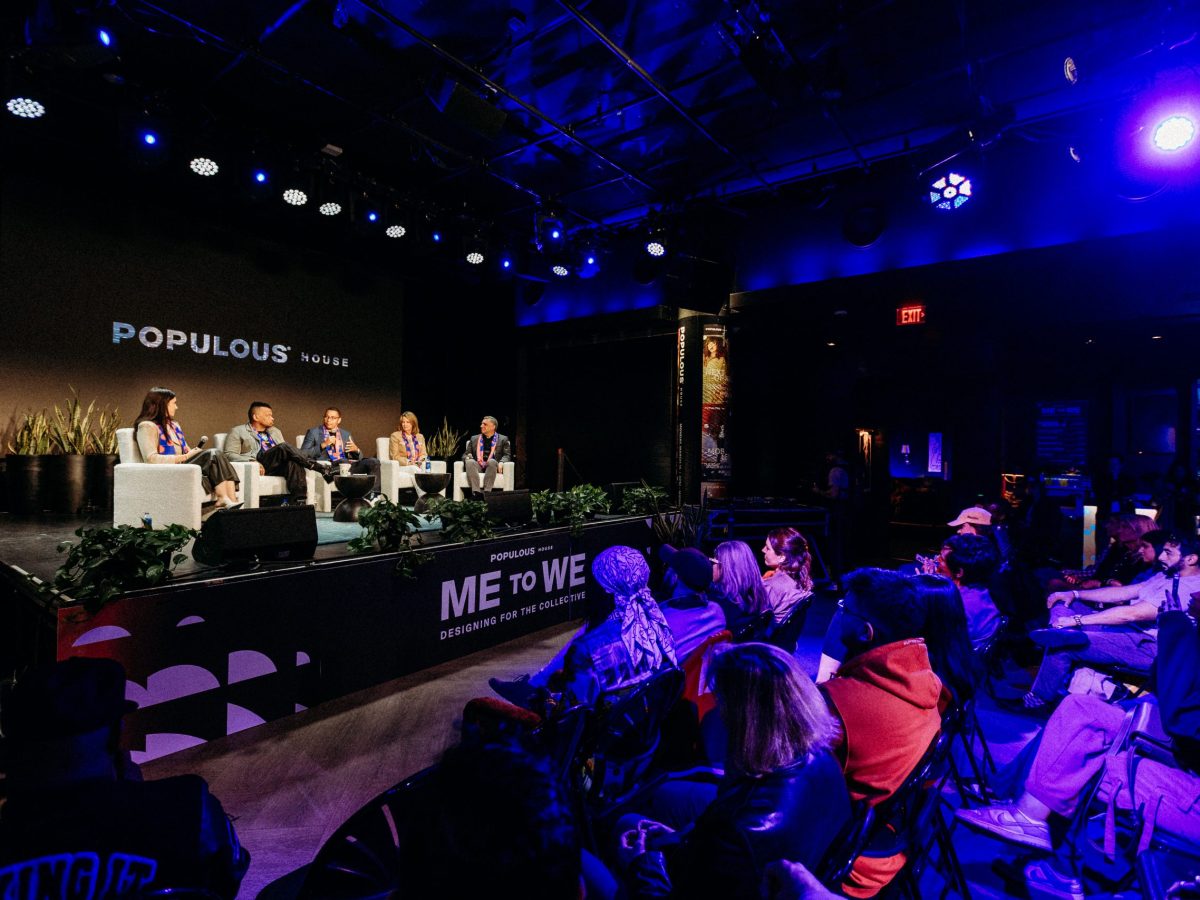
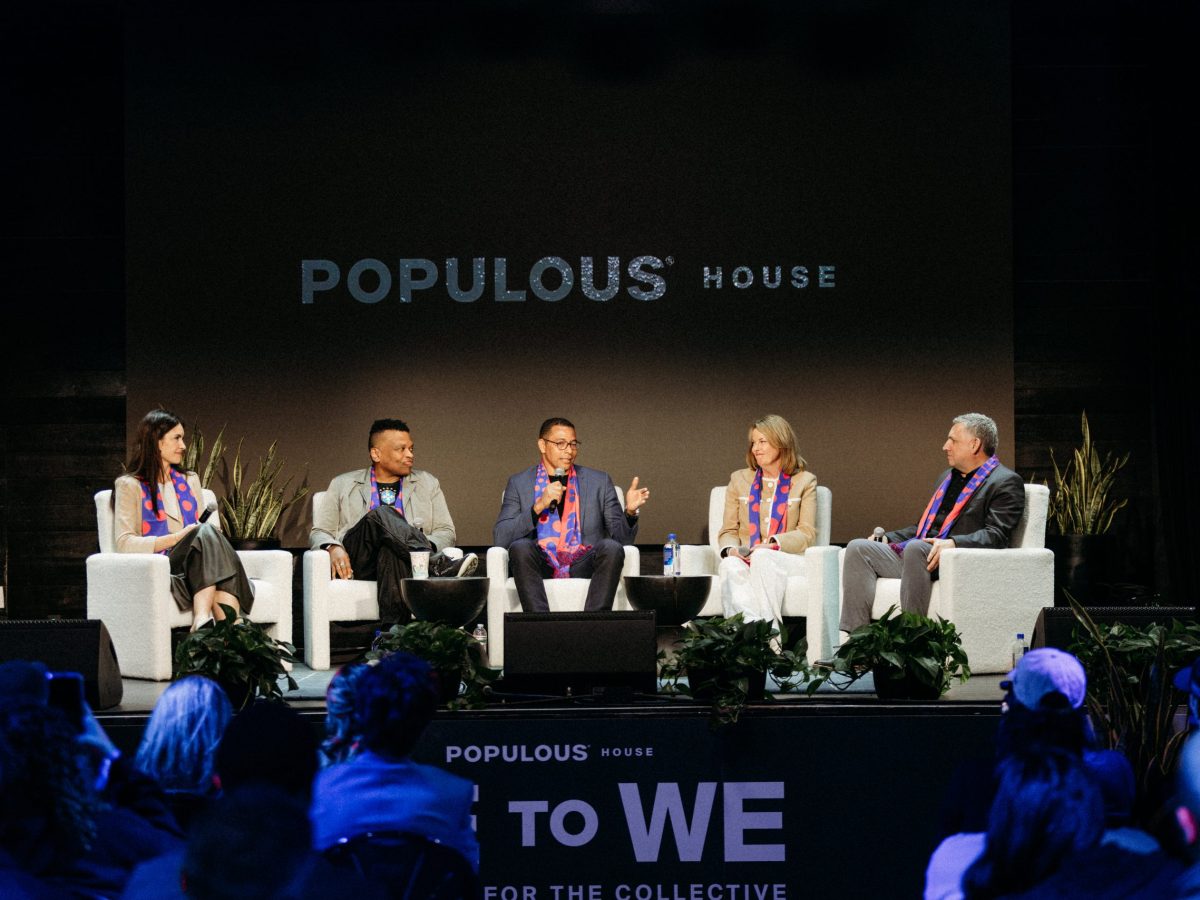
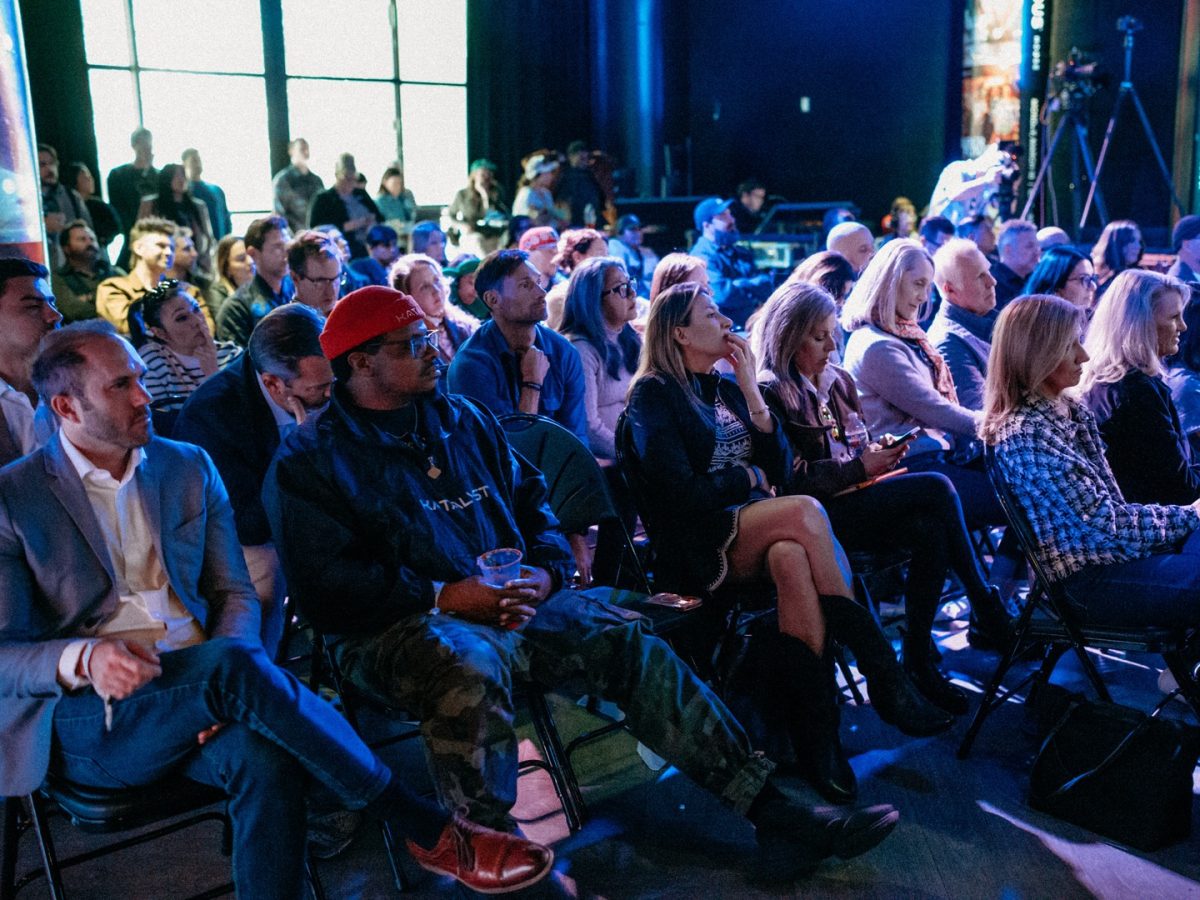
That idea — how to design for memorable moments and connection at massive scale — was at the center of a conversation at Populous House in Austin.
Not size and scope. Not logistics. But instead, how to make moments like that possible at a continental scale.
Because memories from the World Cup will not be defined by how big the event was.
It will be defined by how fans feel in the moment, cheering for their teams alongside thousands of other people.
The moment is the metric
For decades, global events have been measured in numbers: attendance, broadcast reach, economic impact.
Those still matter. But they don’t explain why people attend or care.
What people carry with them is not the size of the crowd or the complexity of the operation. It’s the moment they can point to and say, “I was there. I experienced that in person.”
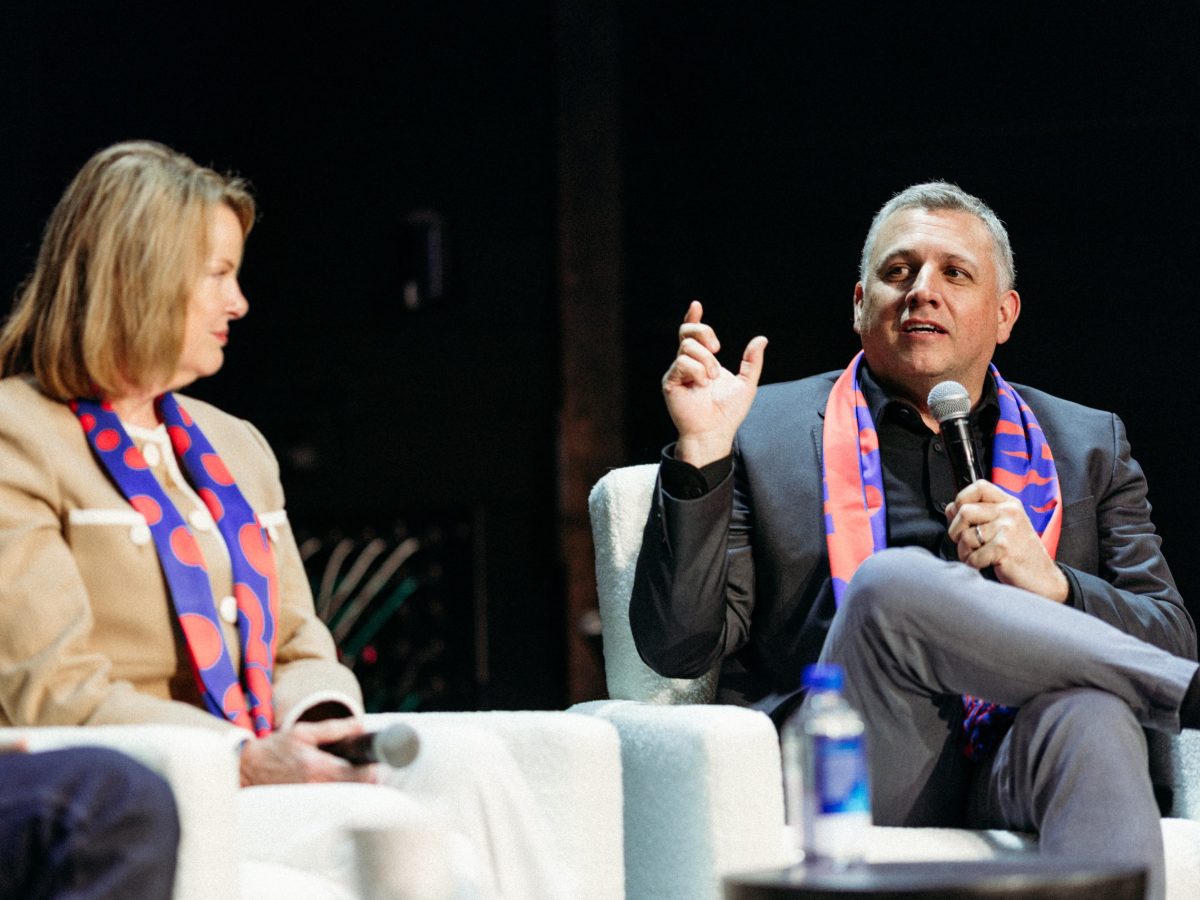
At Populous House, that idea surfaced again and again. Jeff Keas, Senior Principal at Populous, describes the work of event design in simple terms: identify the moments, create the moments and amplify the moments.
Because while much of a mega-event is temporary, the memory is not.
“I imagine that 12-year-old doesn’t remember the score of the game,” Keas said during the ‘One Event. 16 Cities. All of Us’ panel at Populous House in Austin. “But they’re going to remember that moment. And that’s their World Cup moment.”
That shift — from designing infrastructure to designing memory — is shaping the approach to the 2026 tournament, especially at its historic size.
The human story behind the spectacle
For Gilberto Silva, that focus on moments begins long before kickoff.
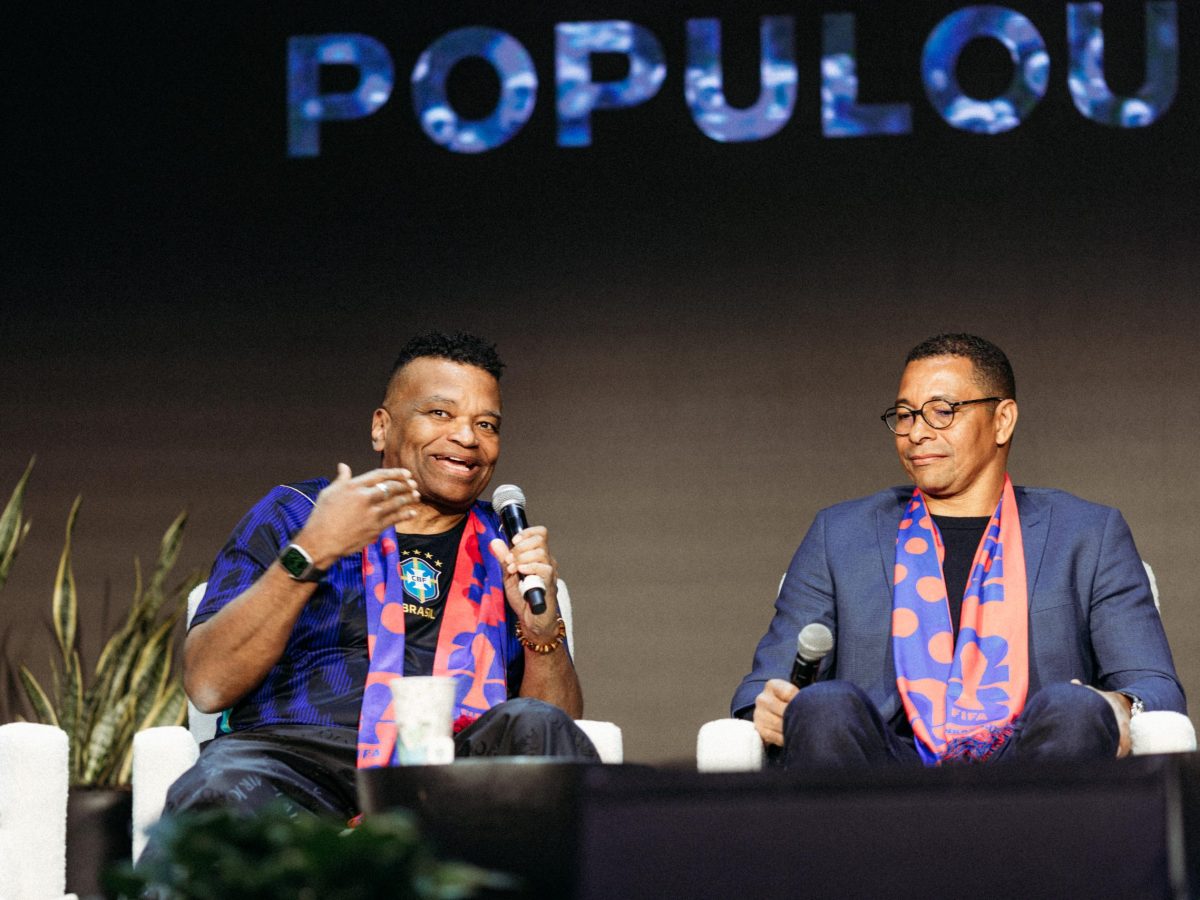
“I think the purpose is more than what’s just the game,” he said. “It’s much more. It’s much bigger.”
Before becoming a 2022 FIFA World Cup™ champion, Silva was a boy playing barefoot in a small Brazilian village. He left football to support his family, working in a factory before finding his way back to the sport.
His story is not what appears on the scoreboard. But it is what gives the scoreboard meaning.
Too often, athletes are reduced to performance, defined by a goal, a mistake or a single match. But what fans connect to is the journey behind those moments: the discipline, the sacrifice, the belief that something bigger is possible.
That connection is what turns a global event into a shared human experience.
Design that makes you feel something
Translating those stories into something people can feel is the work of design.
Wilson Smith, former Design Director at Nike, spent decades working with athletes to bring their identities to life through product. His philosophy is direct.
“Just doing the stuff is nothing unless you are able to make a connection,” he said. “It’s all about the stories.”
At a World Cup, that principle extends far beyond apparel. It applies to cities, to public spaces, to the entire journey of the fan.
Design is no longer just about function. It is about emotion. About creating environments where people don’t just move through space, but experience something within it.
Because the difference between attending an event and remembering it often comes down to whether something made you feel seen, connected or part of something larger.
Hosting people, not just matches
It’s a perspective that carried across the Populous House discussion, where leaders from sport, design and communities returned to the same idea: people don’t just remember event details. They also remember how those events made them feel.
That shift is especially important for host cities.
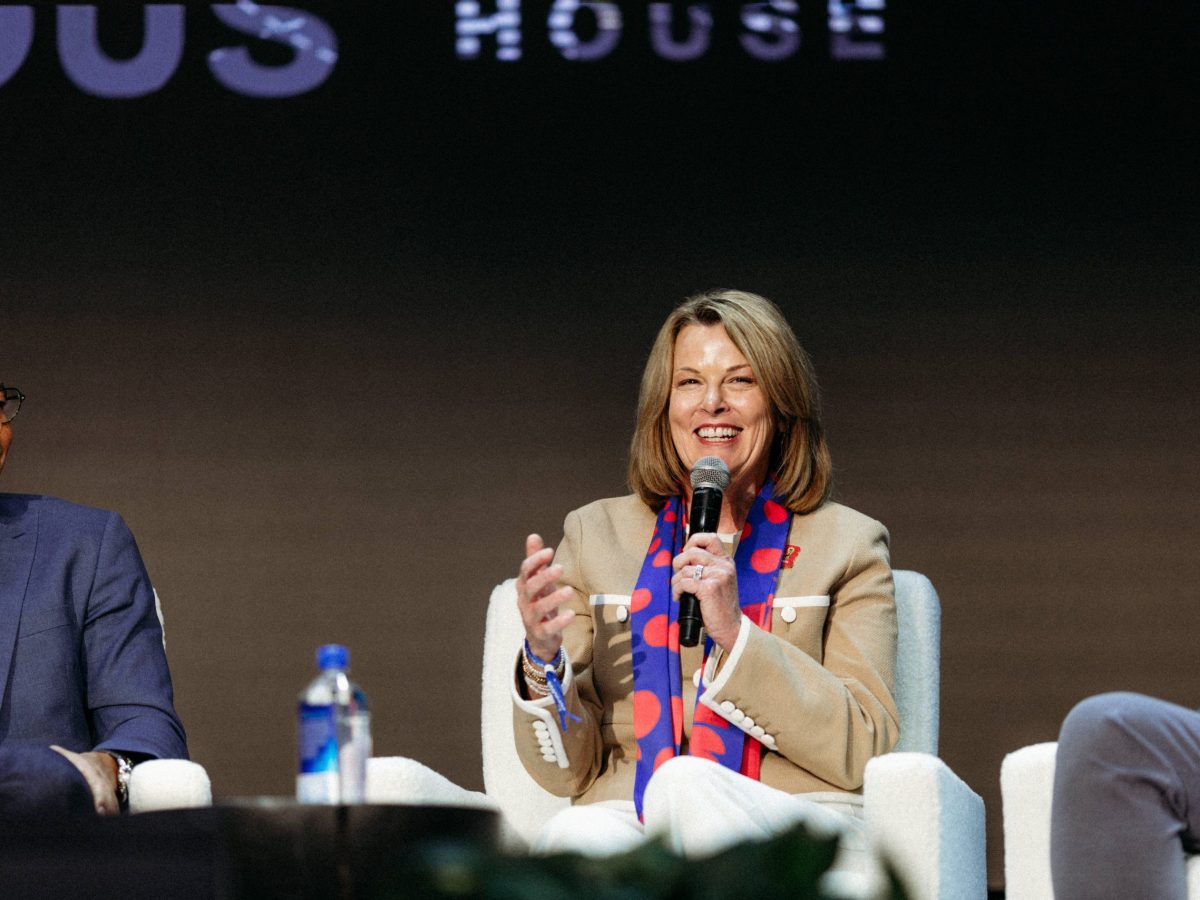
In Kansas City, Pam Kramer, CEO of KC2026, the official overseeing strategy and delivering host city duties for FIFA World Cup 26™, is leading an approach grounded in a simple idea.
“We in Kansas City are very focused on not just hosting matches, but hosting people,” Kramer said.
That mindset reframes the role of a host city. It turns a destination into an active participant in the fan experience, one that shapes how the event is felt, not just how it functions.
For Kansas City, that includes a free Fan Festival — one of only two in North America — designed to make the tournament accessible to a broader community. It also means creating experiences that reflect the city’s identity, from its culture to its genuine hospitality.
The game behind the game
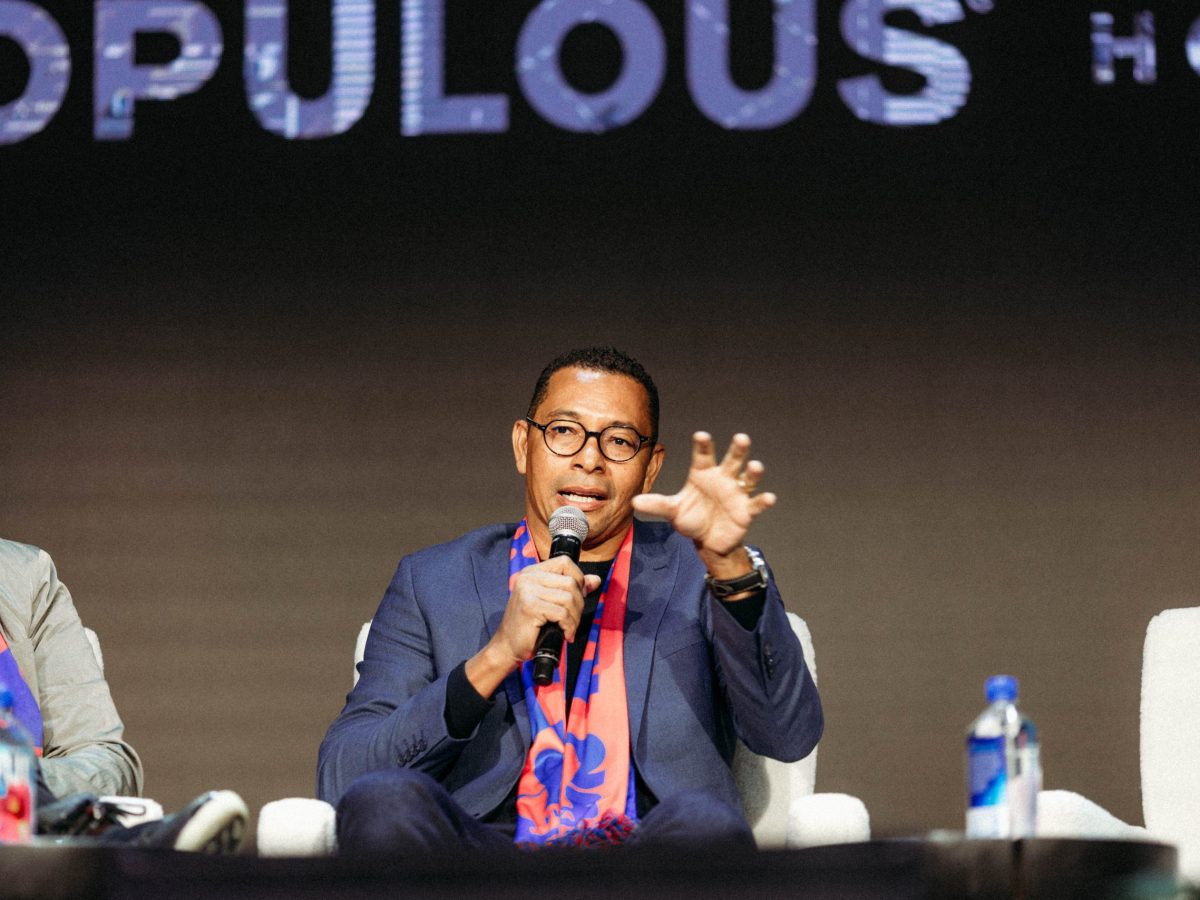
For Silva, seeing that broader picture has changed how he understands the tournament itself.
“There is a game behind the game,” he said. “There are so many different types of events that happen before the football really starts.”
That “game behind the game” includes everything fans don’t see: the planning, the design, the choreography of experience across multiple cities and cultures.
It also includes the moments that happen outside the stadium — the ones that often matter most.
Meandering through a fan festival. An impromptu celebration with ecstatic strangers. A photo that becomes proof of being there.
These are not side experiences. They are the connective tissue of the event.
Local moments, global meaning
At a tournament this large, consistency matters. But sameness does not.
Each World Cup host city has a role to play in shaping the overall experience, and the most powerful contributions are the ones rooted in local identity.
In Kansas City, that will include a 65-foot heart-shaped arch at the Fan Festival entrance, a welcoming gesture designed to reflect the city’s identity as the heart of America.
It is more than a visual landmark. It is a moment. A place where people pause, take photos, gather and begin their experience.
These are the kinds of elements that give a global event texture. They allow fans to feel not just that they are at the World Cup, but that they are somewhere specific with people who share a similar interest or passion.
Somewhere with a point of view.
Extending the moment beyond the physical
Today, those moments do not end when fans leave a venue.
They continue online.
The World Cup now exists across physical and digital spaces at the same time: stadiums, fan zones, brand activations, social platforms, group chats, mobile apps. The experience is continuous, not contained.
That creates new opportunities for connection. It also introduces new challenges.
Silva has seen firsthand the darker side of digital fandom, where fans can turn on you and passion can turn into harassment. His platform, Striver, was created to offer an alternative: a moderated environment where fans and athletes can engage without toxicity.
The idea is simple but critical. If the World Cup is about connection, that connection must be protected.
Because the future of global events will depend not just on how people gather, but on how they interact across every physical and digital space the event touches.
What people will remember
When the final match ends in July 2026, the numbers will be impressive. Records will be set. Metrics will be analyzed.
But that is not what will last.
What will last are the moments.
The ones who felt personal in the middle of something massive. The ones who made people feel part of something bigger than themselves. The ones who turned a global event into an individual memory.
For one fan, it might be a goal.
For another, a celebration.
For a 12-year-old in a tunnel, it might be a single, fleeting interaction.
That is the true scale and the transformative impact of the World Cup.
###
One Event. 16 Cities. All of Us. Panel
Pam Kramer | CEO, KC2026
Gilberto Silva | World Cup Winner and Co-Founder, Striver
Wilson Smith | Former Design Director, Nike
Jeff Keas | Senior Principal, Populous
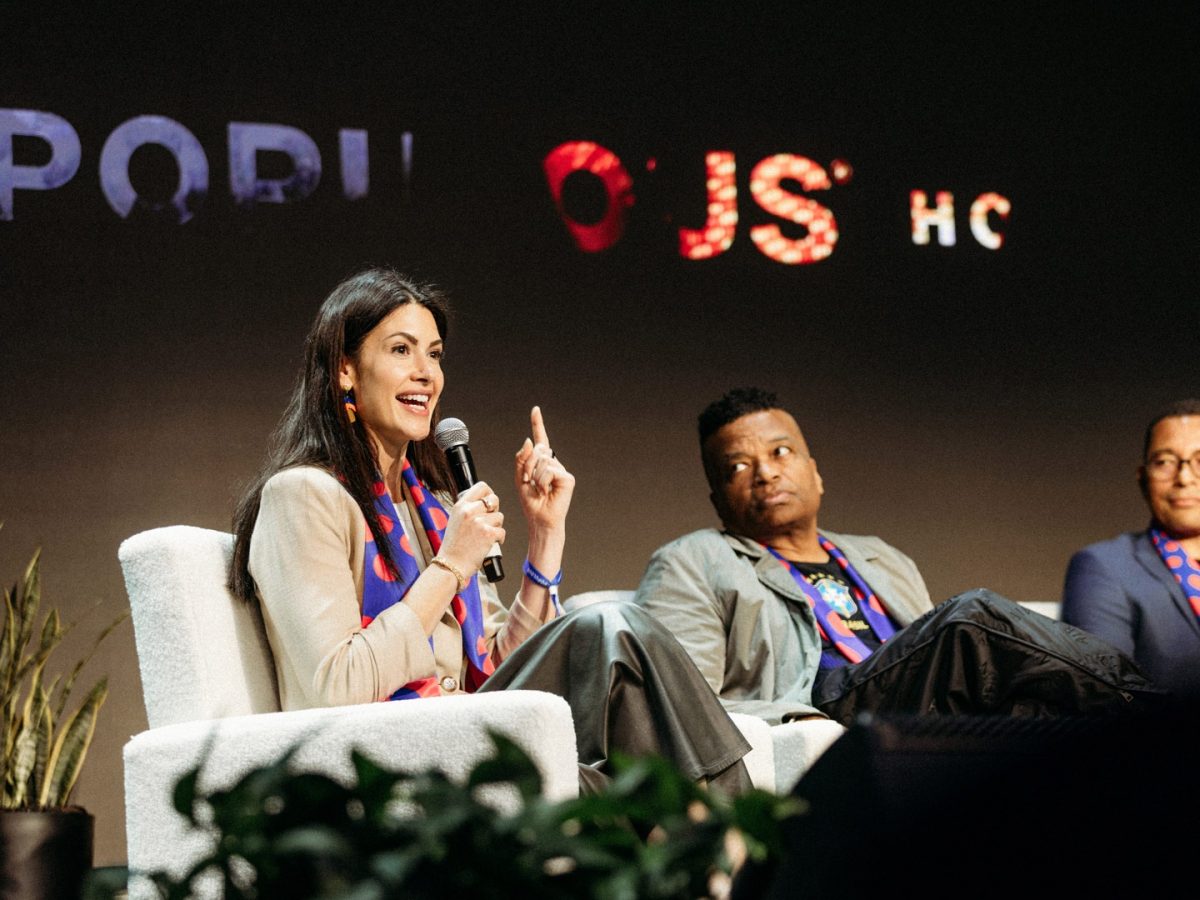
Ariana Vargas | Head of Brand Media & Events, Populous – Moderator

Lorem ipsum dolor sit amet consectetur, adipisicing elit. Non facere corporis et expedita sit nam amet aut necessitatibus at dolore enim quis impedit eius libero, harum tempore laboriosam dolor cumque.
Lorem, ipsum dolor sit amet consectetur adipisicing elit. Illo temporibus vero veritatis eveniet, placeat dolorem sunt at provident tenetur omnis, dicta exercitationem. Expedita quod aspernatur molestias eum? Totam, incidunt quos.